We Took Third Place at the OpenAI/Kernel Hackathon with an AI Team Prototype
Ding Yu
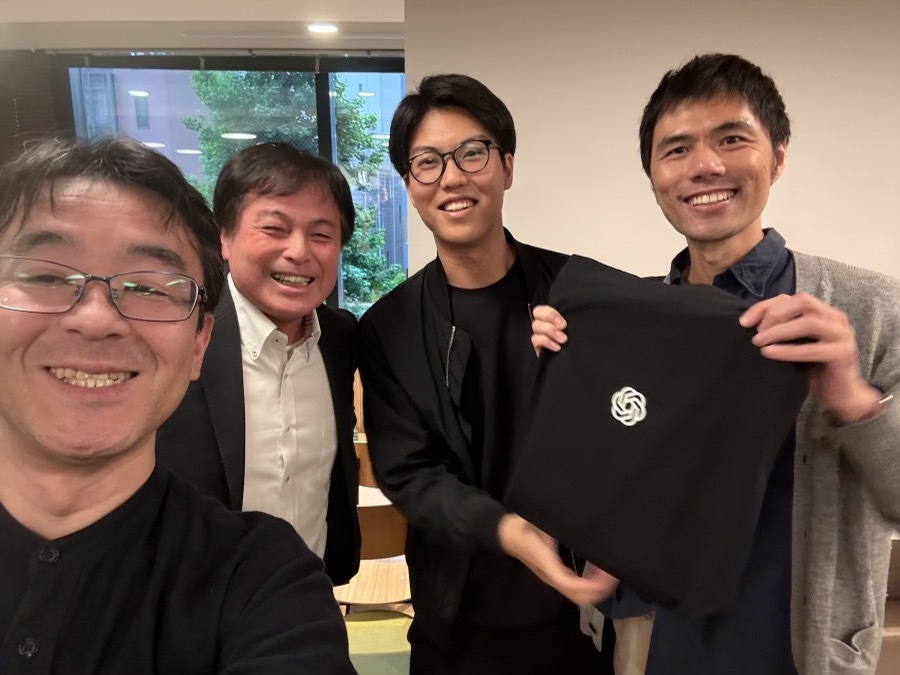
A while ago, I joined a hackathon co-hosted by OpenAI and Kernel. A hackathon is a room full of people trying to build and demo a product in a very short time, then competing to see who built the best one. Most hackathons run for one or two days, so people race the clock, eat whatever is nearby, and nap at the table when they have to.
This was my first hackathon. The whole event only lasted one afternoon, which made it relatively relaxed, but it also meant we had only about an hour and a half of real product-building time.
To make the most of that time, I watched YouTube videos beforehand to understand what usually happens at a hackathon, how teams form, how much preparation makes sense, and what kind of project works well in that format.
Once I had a rough model of the event, I prepared an idea. In recent years I have worked mostly with small and midsize businesses. They are often short on resources, and a lot of their work is still manual and repetitive. I have been trying to automate that work so companies can put more of their limited energy into growth. Now that AI is so capable, can we use it directly? Can it work alongside us like an employee and help us automate office work?
I turned that question, and the product concept of an AI team into a short slide deck and brought it to the event.
What Kind of AI Team Do We Need?
Many existing AI agents still require users to have fairly strong technical skills before they can install and use them. They also tend to make too many execution-time decisions on their own, which can create disastrous outcomes for users. Every so often, you see a story about AI deleting company files or even a database.
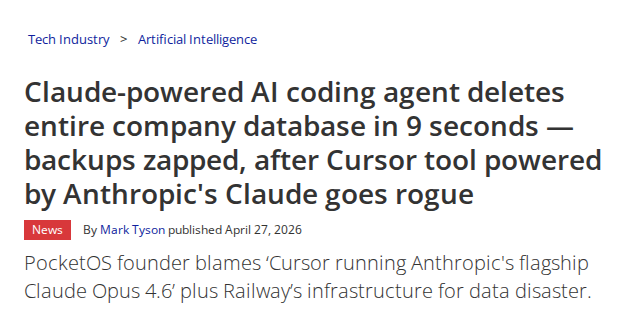
Image: In April 2026, Tom’s Hardware reported that PocketOS’s founder said a Cursor/Claude AI agent deleted the production database and backups through the Railway API.
Using an AI team should be very simple, and safe enough to trust. When we hire a new employee and explain their job, we usually show them business documents, teach them in person, and give them an operating procedure. We expect them to follow the company’s standard process and ask when something unexpected happens instead of making things up.
That is the kind of software I want to build. You tell each AI employee what it should do, confirm its concrete plan, and then it executes that plan strictly.
For example, if you work in operations or finance, you could say:
Every morning, check yesterday’s new eBay orders, put the orders that need invoices into a Google Sheets spreadsheet, and email finance.
The AI employee would open eBay and Google Sheets to understand the current setup, ask you for the finance email address, and then draft an execution plan for your approval. If the plan looks right, it would follow that plan every day. If something outside the plan happens, it would stop and tell you. When the work cannot tolerate mistakes, especially when money is involved, that is the safest behavior.
In short, the product has to be easy to use, safe, and reliable. That is the core of the idea.
At the Hackathon
There were quite a few people at the event, and the hall was full. After the opening remarks, everyone started forming teams.
I immediately started explaining my idea to the people around me. In the end, we formed a four-person team on the spot. The other three members were the CFO of a midsize company, a board director at another midsize company, and the founder of an IT consulting company.
Once the team formed, we started building right away. Since we had only an hour and a half, we decided to make one fun demo: a user asks AI to create a funny video generator. After receiving the request, the AI breaks it into concrete operations, asks for any missing inputs, and turns the approved sequence into a runnable work plan. Running the approved plan does not require the AI to keep deciding what to do next, so there is no randomness; the result is always safe and predictable.
I gave the team and product a very silly name: tb;dd, short for “too boring, don’t do.” The idea was that AI should take the boring work, so humans can focus on creating. By the way, if you use Reddit often, you can probably guess where the name came from.
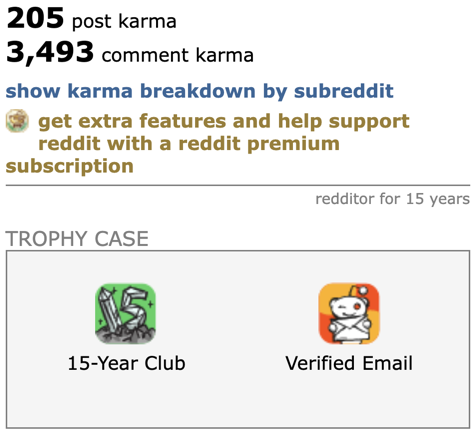
Image: I am in Reddit’s 15-year club, which means I have been on the site for 15 years.
I felt a little nervous during the demo and did not think I explained everything very clearly. But afterwards, someone at the event told me that my presentation was “very good, progressive, and well organized.” :)
When the winners were announced, our team got third place. It was unexpected, and we were very happy. Of course, part of that was because OpenAI gave us a lot of gifts, including a pen, a folder, and a lot of free tokens. Thank you to OpenAI and the host, Kernel.
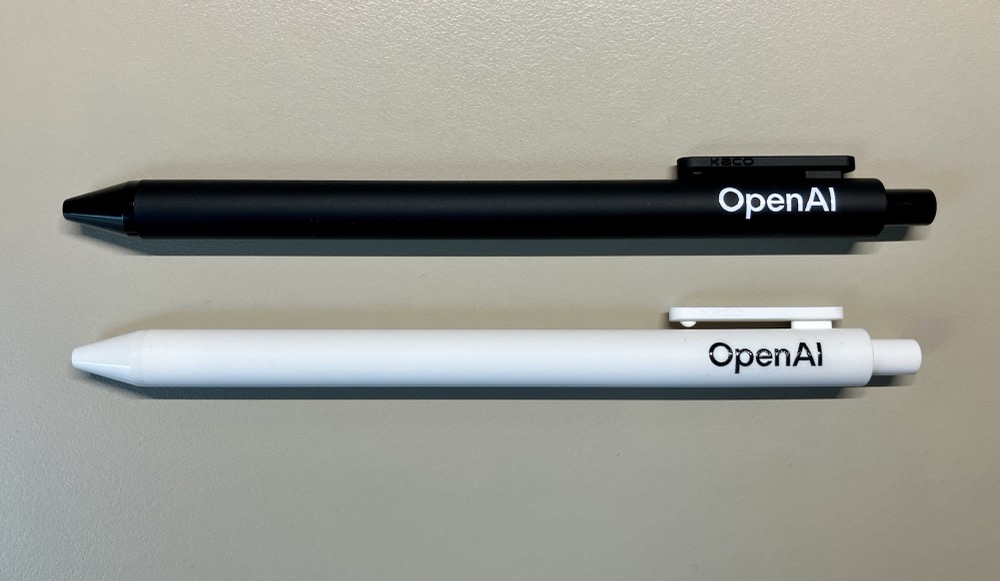
Image: Pens from OpenAI.
What Came Next
I turned this idea into a product called Aqua Blue, at https://aquablue.app. Aqua Blue is already helping a few small businesses with daily work, including TikTok Shop order processing, email marketing for restaurants and salons, and finance reconciliation. It is still in private testing, and I improve it every day. If you want to use an AI team in your own work, contact me for a trial.